


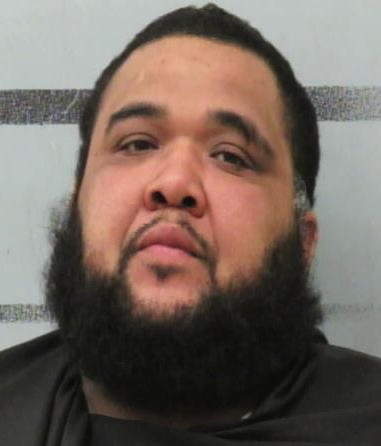
06 Oct Lubbock Man Sentenced to 20 Years for Deadly Fentanyl Delivery
A 40-year-old Lubbock man was sentenced to 20 years in prison after pleading guilty to supplying the fatal dose of fentanyl that killed a 38-year-old woman in 2024.
Donnie Ford Jr. pleaded guilty to a second-degree felony charge of manufacturing or delivering a controlled substance causing death or serious bodily injury. Court records show the plea agreement dismissed an initial murder charge filed under a 2023 Texas law that exposes drug dealers to first-degree felony prosecutions.
Under the terms of the agreement, Ford received the maximum 20-year sentence for the second-degree charge and must serve at least one-fourth of his sentence before becoming eligible for parole.
Lubbock police launched an investigation on Sept. 17, 2024, after finding the victim unresponsive in a bathtub at a residence in the 5800 block of 15th Street. Medics pronounced her dead at the scene. Investigators recovered two fentanyl pills wrapped in aluminum foil and noted the victim held a lighter, indicating she had vaporized and inhaled the drug. An autopsy confirmed the cause of death as mixed toxicity from fentanyl and alcohol.
Phone and social media records showed the victim ordered four fentanyl pills from Ford the previous evening. Ford left the drugs in her mailbox and kept one pill for himself as payment.
Using the victim’s phone, an undercover detective arranged a second buy from Ford. Officers arrested him outside his residence after he agreed to the transaction, seizing three additional fentanyl pills wrapped in aluminum foil. During questioning, Ford admitted to acting as a middleman between the victim and an unidentified supplier to support his own addiction.
Prosecutor Russell Mayne said the decision to abandon the murder charge followed discussions with the victim’s family and an evaluation of the legislative intent behind Texas’s drug-induced homicide statute.
“That statute was really designed to go after drug kingpins,” Mayne said, adding that evidence showed the victim intentionally sought out the drug. “After looking through the case file and going through other things, speaking with the victim’s family, we felt that the best charge was manufacturing or delivery (of a controlled substance) causing death and Mr. Ford was sentenced to the maximum sentence on that charge.”
Defense attorney Nick Olguin argued that treating drug delivery as murder creates a “strict liability case” that ignores shared responsibility. “I think there is an element of personal responsibility from the victim in this case and I think this is a just outcome,” Olguin said.
First Assistant District Attorney Mandi Say read a victim impact statement from the woman’s mother during the hearing, highlighting the impact on the family and the victim’s young daughter.
“I hope that my daughter’s death serves as a reminder that providing drugs to another person can have consequences far beyond that moment,” the mother wrote. “A decision that may take only seconds can leave families devastated for generations.”
No Comments