


08 Oct WT Lands Largest Federal Grant in School History for $19.5M Agriculture Complex
West Texas A&M University has secured a landmark $9.75 million grant from the U.S. Department of Agriculture, the largest federal award in university history, to anchor a $19.5 million cattle feedlot research and education facility.
Matched dollar-for-dollar by $4.875 million from The Texas A&M University System and an equal sum from industry partners and private donors, the project aims to establish the world’s most advanced center for beef production research.
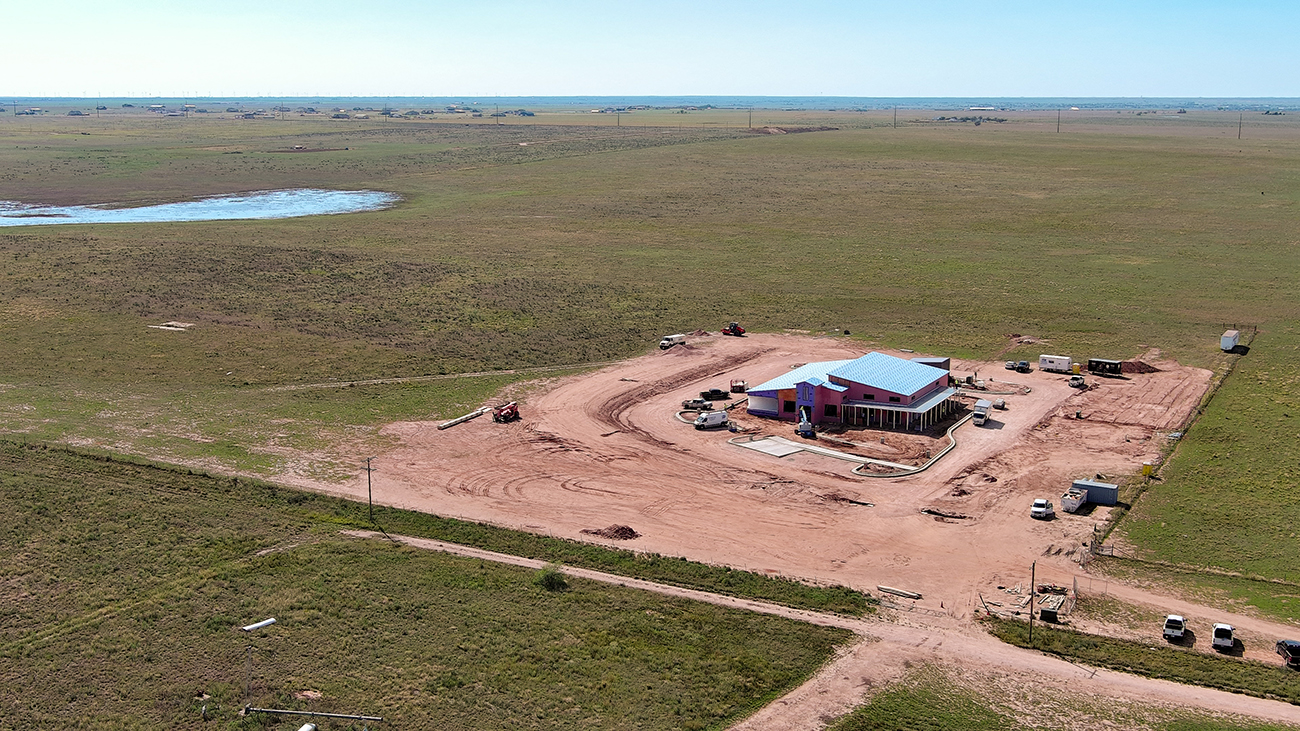
Rising southwest of WT’s existing feedlot near the 2,393-acre Nance Ranch east of Canyon, the complex bridges the gap between academic study and commercial application. Ground broke in November 2025 on the site, made possible in part by a 42.84-acre land gift from Canyon ranchers Mike and Gary Kuhlman.
The facility pairs 90 small-scale research pens with 45 commercial-scale pens. This setup allows undergraduate, graduate, and veterinary students to evaluate herd health and management under real-world conditions alongside leading faculty.
The campus will house a precision cattle handling facility, a veterinary care and research hospital, a metabolism and physiology center, and an advanced feed production hub. Researchers will pair traditional methods with artificial intelligence to optimize feeding efficiency and advance feedlot management.
Integrated into the complex is the Paul F. and Virginia J. Engler Foundation Feedlot Education Facility. That branch of the project is funded in part by $3.1 million in federal community project grants secured by U.S. Rep. Ronny Jackson.
Major financial backing spans key agricultural stakeholders, including the Texas Cattle Feeders Association, a $2 million gift from the Engler Foundation, $1 million from Champion Feeders, and support from regional lenders and livestock operations.
The project arrives during a period of rapid institutional growth for WT, where agricultural research funding has surged 618 percent since 2021.
Beyond boosting scientific output, university leaders and industry executives expect the new center to secure the Texas Panhandle’s role as a beef industry hub while training the next generation of feedlot owners, managers, and researchers.
No Comments