


12 Nov Texas Tech Opens Telecom Research Incubator to Test Critical Infrastructure Security Technology
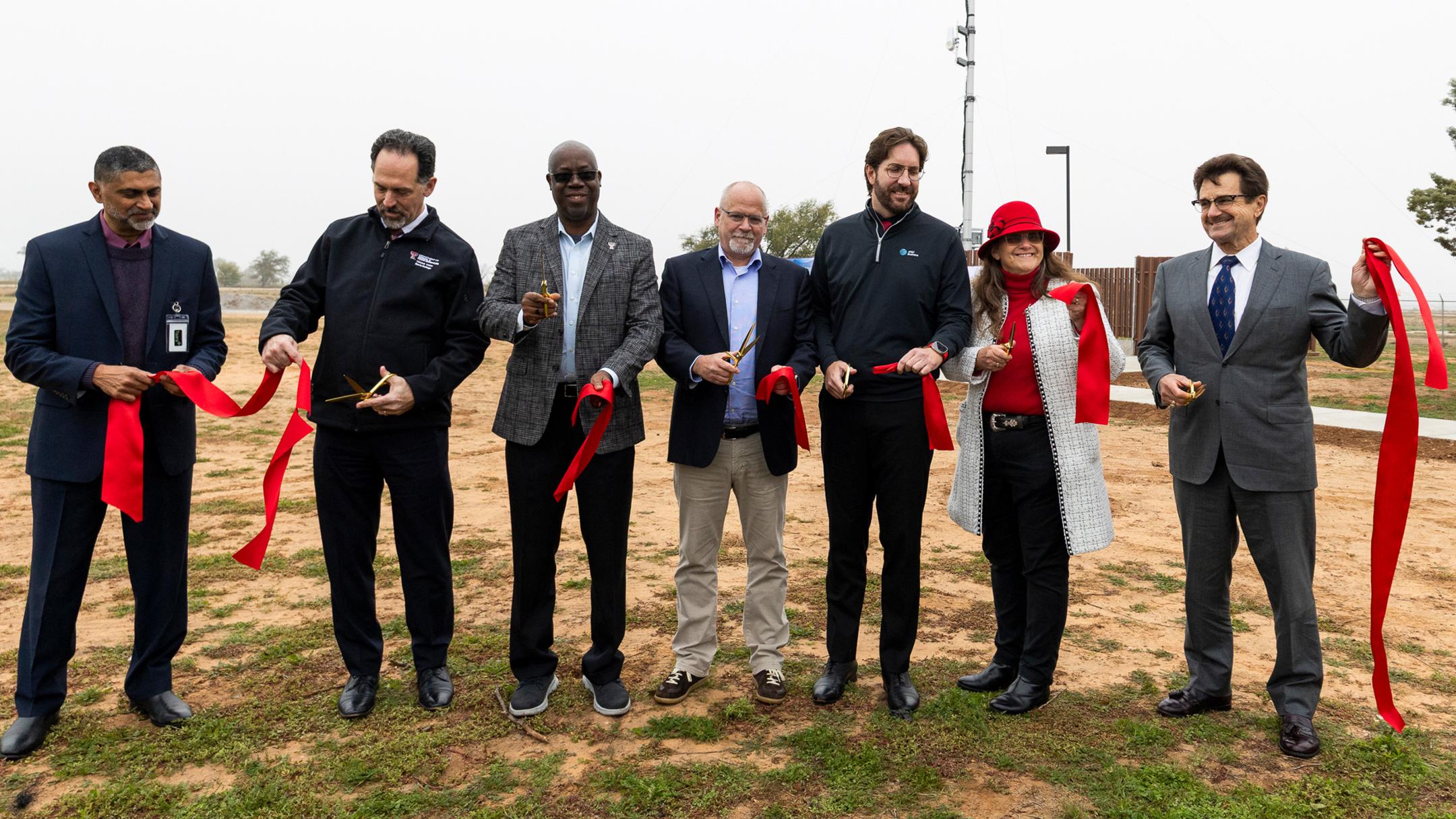
Texas Tech University opened a new research program Tuesday that will test technology meant to protect critical infrastructure, according to the university. The Critical Infrastructure Telecom Ecosystem Incubator, known as CITEI, was marked with a ribbon-cutting and a series of live demonstrations at the Texas Tech University Reese National Security Complex, or RNSC.
Stephen Bayne, the university’s vice president for national security, said CITEI combines Texas Tech research, the complex’s capabilities and outside companies to work on problems under “real-world conditions.”
The Texas University Fund supports the program. Brenda Connor leads it as senior technical director of the Critical Infrastructure Security Institute, or CISI, and as a professor of practice in the Whitacre College of Engineering’s Department of Electrical & Computer Engineering.
AT&T and Nokia Federal Solutions are working with the university’s researchers on communications systems for places where regular connections are scarce, knocked out or exposed. Connor said AT&T supplies telecom expertise and licensed spectrum, while Nokia Federal Solutions provides a private cellular network. Two companies, Valkyrie UAS Solutions and Taara, use the setup to put their own technology through its paces, she said.
Several technologies were demonstrated Tuesday.
Nokia Federal Solutions presented its Integrated Sensing and Communications system, which applies artificial intelligence to sharpen situational awareness in defense and border security work as well as infrastructure operations. Researchers also showed how its detection data can be passed to other systems for real-time awareness and automated responses.
The same wireless technology can follow moving objects such as ground vehicles and drones. In testing, it picked up and tracked drones moving above 60 mph at heights over 300 feet. Valkyrie UAS Solutions operated the Group 2 drones and has a presence at the RNSC.
In a separate test, the team sent high-speed mmWave signals across more than two miles, which the university said points to a way of extending service to remote areas with little infrastructure.
The team also showed a private wireless setup that connects with compatible FirstNet and AT&T devices, giving emergency responders and crews in remote locations another way to communicate. Texas Tech said that could matter most during disaster recovery, large gatherings, critical infrastructure work and tactical deployments.
The last demonstration covered free-space optical communications, which move data using narrow beams of light rather than fiber-optic cable or radio waves. The university described it as a high-capacity option when regular networks are down or impractical to build.
Researchers plan to study next how well the systems hold up in bad weather, which the university called an important question for emergency and defense use.
The Critical Infrastructure Security Institute works on research, teaching and collaborations aimed at keeping essential systems secure, Texas Tech said. Its areas include defense, energy, water, agriculture, health care and telecommunications.
No Comments