


13 Nov Lubbock Company Develops Device Meant to Prevent Crude Oil Theft at Load Lines
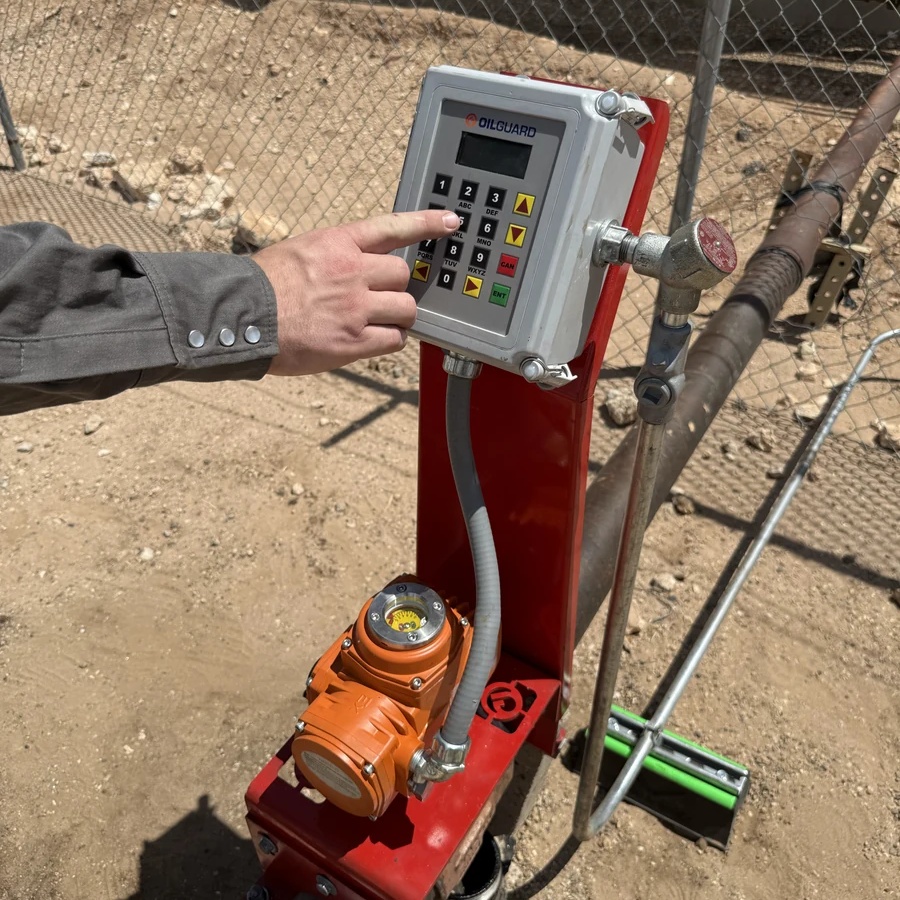
A Lubbock company has developed a device meant to stop crude oil thieves by locking down the valve on a producer’s load line, according to the Midland Reporter-Telegram.
The product, OilGuard, from RIOT Industrial, limits who can open the load line valve to people the producer has approved. The producer decides who gets access and can grant or cancel permission at any time, which the company says keeps stolen credentials from working. The unit logs each use and sends an alert whenever the line is opened. It runs on its own, with built-in cellular service, remote monitoring, plus alarm calls.
Colton Wiemers, the company’s business development vice president, said OilGuard can be fitted onto load lines that are 3 or 4 inches wide without a major redesign and does not depend on any automation or SCADA system already being in place.
Wiemers said the idea grew out of a gap in how producers respond to theft. Cameras, locks and tank level monitoring tell an operator about a theft after it happens, he said, and the oil is already gone by then. The company asked why the effort goes into “catching someone after they stole instead of preventing them having access to the oil in the first place.”
He described a client with 120 wells pumping roughly 800 barrels daily that suffered three thefts in under 60 days even with cameras and locks in place. In one theft, the initial load pulled from a newly drilled well left the tank prior to reaching the sales line. Wiemers put the losses at over $42,000, not counting time spent investigating, idle production and additional expenses.
After the client put OilGuard on its load line, it has had no thefts at the sites that have the device, while other producers nearby continue to report them, Wiemers said.
He added that keeping people away from the valves has safety and environmental benefits, since thieves are entering working facilities with tanks, piping and hydrocarbons. Blocking access should mean fewer spills, less equipment damage and fewer chances for exposure to hydrogen sulfide, he said, and he pointed to several instances in which activists opened valves on load lines, causing spills.
Complaints of theft from the oilfield keep rising. Petroleum economist Karr Ingham, who heads the Texas Alliance of Energy Producers, sits on the State Task Force on Petroleum Theft. He cited an early industry figure putting the economic cost of oilfield theft to Texas at $4.3 billion. The Legislature created the task force, which the Railroad Commission of Texas oversees. The Texas Department of Public Safety also has an Oilfield Theft Task Force that investigates thefts ranging from tubing and trailers all the way to crude.
No Comments