


06 Oct Jury finds search based on Carrizo Springs trip unlawful
A federal jury has ruled that Bexar County violated a Houston businessman’s Fourth Amendment rights after deputies leveraged automated license-plate surveillance to execute a staged 2022 traffic stop on Interstate 35. On September 28, the jury awarded plaintiff Alek Schott $76, a symbolic dollar for every minute he was unlawfully detained on the shoulder of the highway. Schott requested only $1 per minute of detention, seeking accountability rather than financial recovery in the lawsuit, which was backed by the public-interest law firm Institute for Justice.
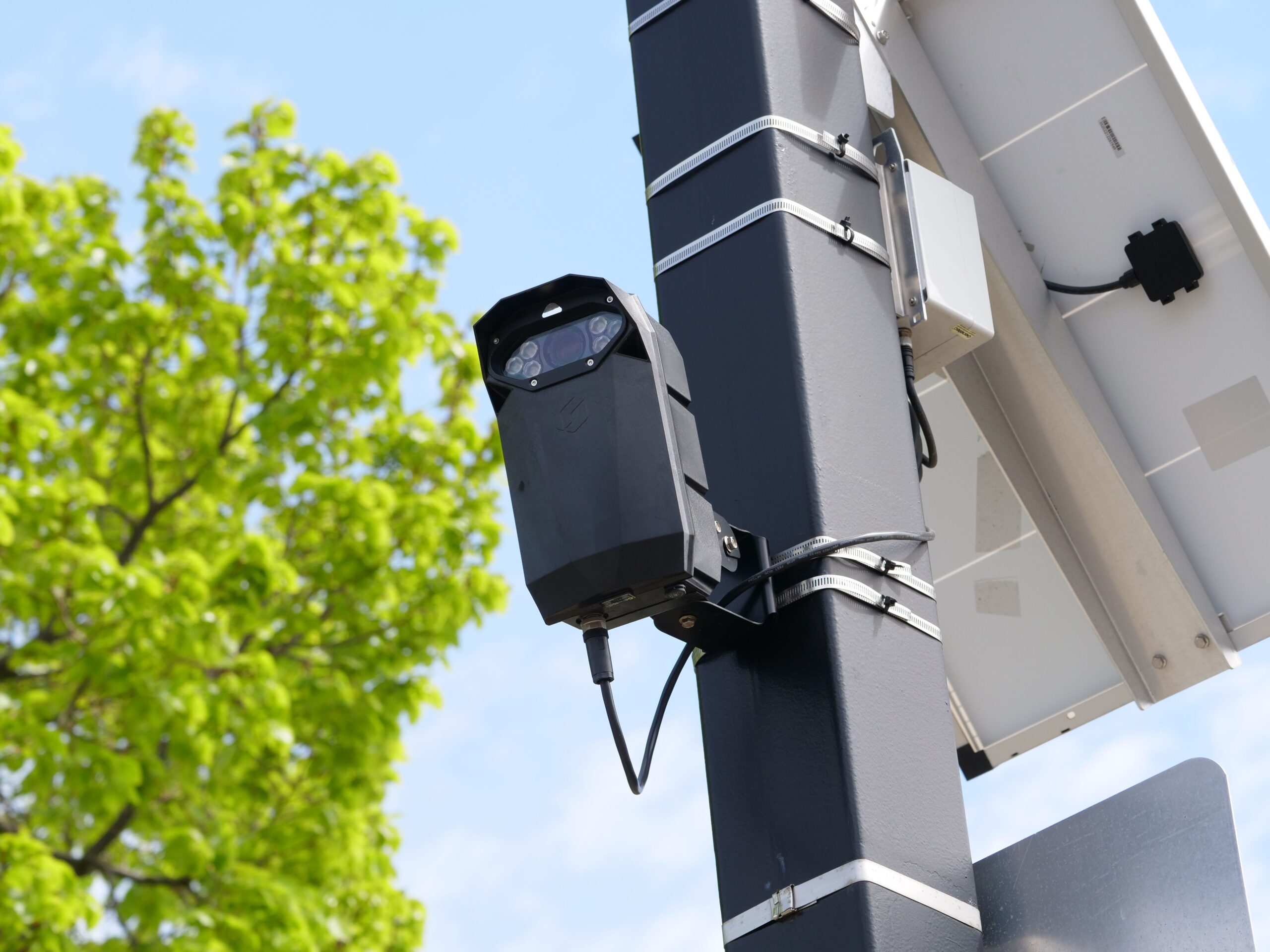
Trial evidence revealed that Schott was ensnared in a systematic interdiction routine designed to convert mass surveillance into invasive roadside searches. Under this multi-step scheme, regional and national networks of automated license-plate readers logged vehicle locations across Texas, allowing analysts and law enforcement tipsters to flag ordinary commercial travel—such as driving toward the southern border and returning—as suspicious. Deputies then manufactured fake traffic infractions to justify pulling over the targeted vehicles. Once stopped, officers removed motorists from their vehicles, placed them in patrol cars, and interrogated them while pressing for search consent. If a driver refused, handlers manipulated drug-sniffing K-9s to trigger false alerts, fabricating the probable cause needed to search anyway.
That routine unfolded on the morning of March 16, 2022, when Schott, a salesman for his family’s oilfield equipment business, RMS Controls, was returning home to Houston after an overnight client visit in Carrizo Springs. Shortly after 11:00 a.m., Deputy Joel Babb pulled Schott’s Ford F-250 over, claiming the vehicle had drifted heavily across the fog line. Trial evidence completely refuted the claim; Schott’s personal dashcam footage showed he never left his lane, while Deputy Babb’s patrol vehicle lacked a forward-facing camera to support his story.
The traffic stop was prompted not by driving behavior, but by an alert sent through a private WhatsApp group chat named the “Northwest Highway Group.” Deputy Babb testified that a tip flagging Schott’s truck originated from an individual known only as “Kiki,” whom Babb believed worked for a federal fusion center in Laredo. Babb parked along I-35, waited for Schott’s truck to pass, and initiated the stop. Body camera footage captured Babb admitting to an arriving K-9 handler that Schott’s vehicle was “one of the ones I’ve been looking for” and that officers “had been tracking it.”
Deputies forced Schott into the front seat of the squad car and spent over an hour questioning him about his personal background, finances, and line of work. When Schott refused to consent to a search, Babb called in a narcotics dog. Despite interfering environmental factors like nearby roadkill, shifting winds, and open windows, deputies used the dog’s alert to justify a comprehensive 40-minute search. They emptied bags and tore apart interior panels, hunting for hidden compartments, but found nothing. Before releasing Schott, Babb casually admitted on camera that nine times out of ten, these searches turn up nothing.
When Schott initially filed a formal complaint, the Sheriff’s Office dismissed it and invited him to sue. Because federal civil rights claims against local governments require proving a widespread policy or custom rather than a single rogue act, Schott’s legal team presented evidence demonstrating that the Criminal Interdiction Unit ran thousands of drivers through this exact routine, stopping roughly 20 vehicles and executing 10 warrantless searches daily.
While Bexar County considers an appeal, attorneys from the Institute for Justice plan to ask the court for a permanent injunction prohibiting Bexar County from using artificial traffic violations as a cover for warrantless interdictions. The verdict comes amid a rapid expansion of local surveillance capabilities. In 2022, only four Bexar County patrol cars carried license-plate readers; today, the technology is integrated into the entire fleet. Schott warned that with one click of a license plate on a police computer, officers can view a driver’s entire travel history. Both the Bexar County Sheriff’s Office and the District Attorney’s Office declined to comment.
And to quickly clear up what happens here: the jury found Bexar County’s license-tracked powered search scheme unconstitutional but that doesn’t mean Bexar County has to stop. Only a judge, through an injunction, can formally shut down the program. This is what the Institute of Justice is working through now–getting the judge to issue the injunction. What Bexar County can do simultaneously though is file for appeal and try to convince the 5th U.S. Circuit Court of Appeals that the jury got it wrong and why. The appeals process in this country is lengthy and it would probably be 1-2 years before Bexar County gets a ruling. What happens when the original case is being appealed but the judge has issued an injunction? Bexar County would immediately request a temporary stay with the same judge. This is essentially temporary permission to keep running the search program while the appeals court deliberates the appeal (again 1-2 years). That’s if the judge grants the stay but they can also reject it and the program has to be paused until the appeal court reverts with a decision. Who knows what will happen. Hopefully they don’t strip my car the next time I drive down to the Rio Grande Valley and back.
No Comments