


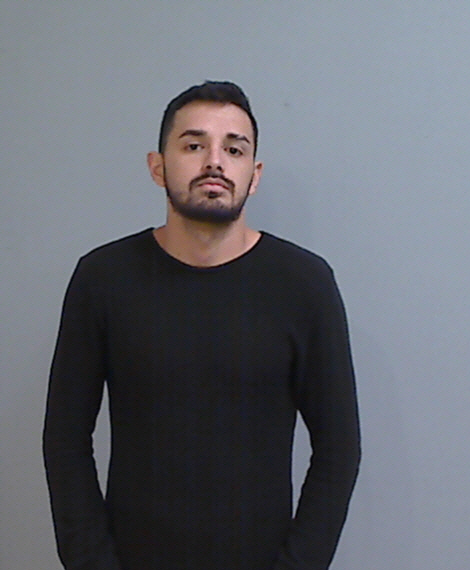
08 Oct Mission Man Acquitted in Double Murder Case
A 32-year-old Mission man was acquitted Tuesday of capital murder in connection with the 2015 double homicide of two 20-year-old women.
A jury found Guadalupe Garcia Vela not guilty following a trial that began Sept. 23. Authorities had accused Garcia of shooting Yvette Garza and Nathalie Ingridh Hernandez, who died from gunshot wounds to the head and neck.
The verdict concludes a nearly decade-long legal process. Palmview police initially arrested Garcia in January 2016, a month after the killings. He remained in custody until November 2022, when he was released on bond following a July 2022 deadlocked jury and mistrial during his second trial.
The case stems from Dec. 20, 2015, when Palmview police responded around 12:31 a.m. to a shooting on Eastview Circle. Officers arrived to find Garza and Hernandez lying in the street with multiple gunshot wounds, surrounded by scattered CO2 canisters. Witnesses reported hearing shots before a white Chevrolet Camaro sped away from the scene.
Twelve hours later, police responded to a home on West Mile 4 Road after Antonia Vela reported discovering blood inside her Camaro. She told investigators she had loaned the car to her son, Garcia, the previous evening around 8 p.m. and could not reach him because his phone was off.
A search of the residence yielded clothing in a bathroom that smelled of gunpowder residue and a pair of boots in Garcia’s bedroom stained with blood drops. Inside the Camaro, officers recovered a white pearl earring belonging to one of the victims. Authorities also noted that one victim had multiple packages of a white powdery substance wrapped around her waist.
Investigators ultimately apprehended Garcia on Jan. 12, 2016, execution of two Kleberg County fugitive warrants for drug and weapons charges before formally charging him in the double homicide.
If you are confused on why he was acquitted, it comes down to the strict standard of proof required for a capital murder conviction, which carries a mandatory sentence of life in prison without parole. Prosecutors must prove guilt beyond a reasonable doubt, a hurdle that is difficult to clear when relying entirely on circumstantial evidence. While blood in a borrowed car, matching ammunition, and stained boots created a strong trail of suspicion, the state lacked direct evidence, such as a recovered murder weapon, DNA on a trigger, or eyewitnesses identifying the shooter. Because the case involved a midnight drug transaction with potential alternative suspects, the jury determined the state failed to rule out every reasonable doubt before handing down a permanent, lifelong sentence.
No Comments